
Ventilation That Prevents Moisture and Improves Comfort
Ceiling and Exhaust Fan Installation in Rochester for homes needing better airflow, moisture control, or temperature regulation
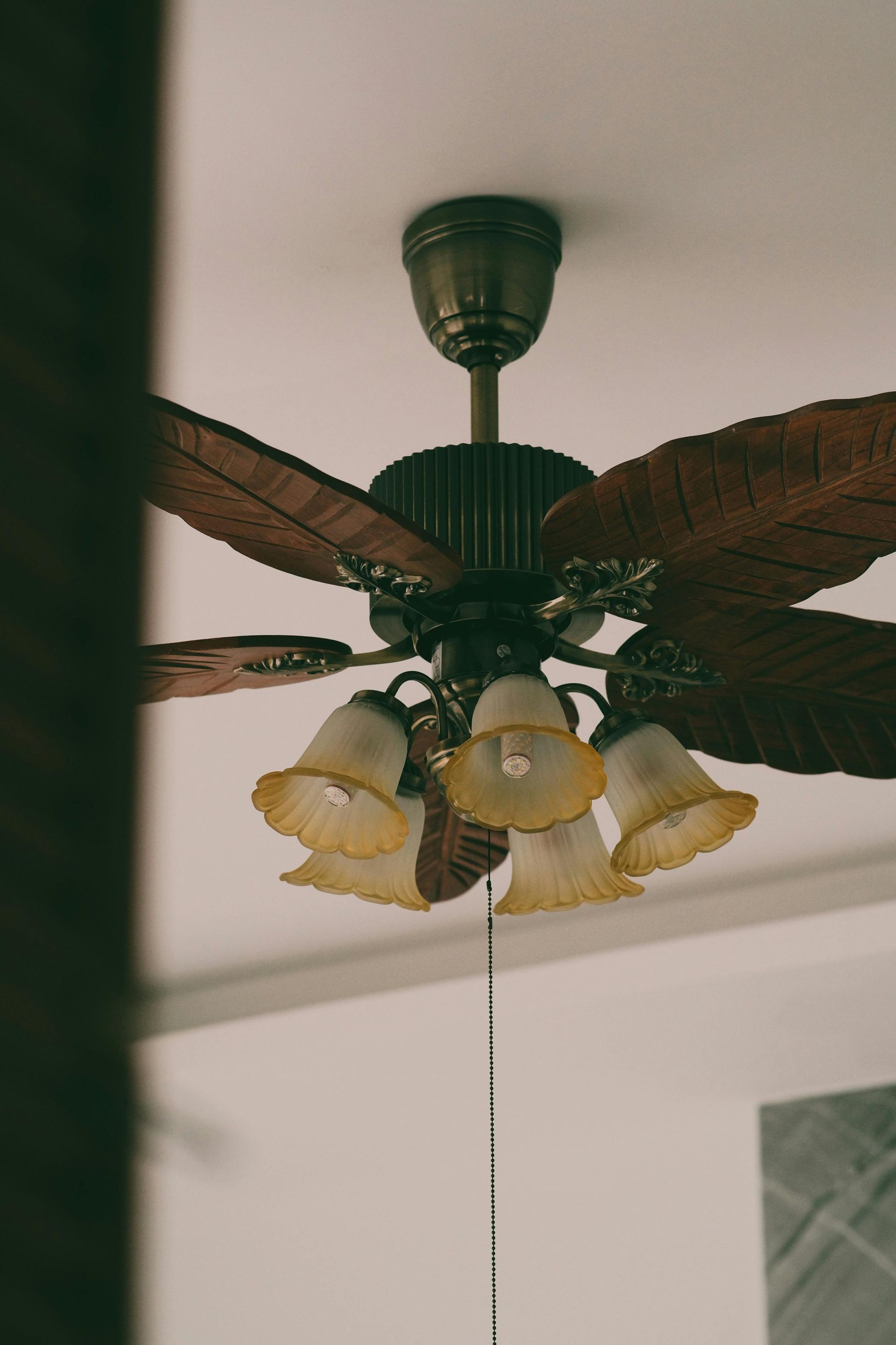
Bathrooms without exhaust fans trap humidity against walls and ceilings, leading to mold growth, peeling paint, and persistent odors. Jeff Thomas Electric installs and replaces ceiling fans and exhaust fans in bathrooms, kitchens, and utility spaces to address ventilation issues common in older homes that were built without adequate airflow systems. Ceiling fans improve comfort by circulating air during both heating and cooling seasons, reducing reliance on HVAC systems and lowering energy costs.
The installation process includes mounting fans securely to ceiling joists or approved bracing, running proper wiring from switch locations, and ensuring that exhaust fans vent to the exterior rather than into attics or crawl spaces. Safe mounting is critical, especially for ceiling fans, which generate vibration and require support beyond what standard electrical boxes provide. Proper wiring includes using the correct gauge wire for the fan's motor draw and installing switches that control speed and lighting independently when those features are present.
Book installation service to add ceiling or exhaust fans in areas where ventilation currently falls short.
How Proper Ventilation Installation Works
Installing exhaust fans requires cutting openings in ceilings, securing the fan housing between joists, and running ductwork to an exterior vent cap that prevents backdrafts and weather intrusion. The duct must be insulated in unconditioned spaces to prevent condensation from forming inside the pipe, which can drip back into the fan or onto ceiling materials. Exhaust fans are rated by CFM, or cubic feet per minute, and the capacity needs to match the room size to effectively remove moisture and odors without creating excessive noise.
After installation, bathrooms and kitchens clear steam and cooking odors much faster, and surfaces stay drier between uses. You'll notice that mirrors fog less during showers, paint and wallpaper last longer without bubbling or peeling, and musty smells disappear from spaces that previously felt damp. Ceiling fans make rooms feel several degrees cooler in summer by moving air across skin, and in winter, reversing the blade direction pushes warm air down from ceiling level to improve heating efficiency.
Choosing the right fan involves matching airflow capacity to room volume, selecting noise levels appropriate for bedrooms versus utility areas, and deciding whether features like lighting, humidity sensors, or timers add value for your specific use case. Exhaust fans with built-in humidity sensors activate automatically when moisture levels rise, which is useful in bathrooms where users forget to turn fans on manually.
Common Questions About This Service
Fan installations bring up questions about mounting requirements, ductwork, and how to choose the right equipment for different spaces.
What mounting requirements do ceiling fans have that regular light fixtures don't?
Ceiling fans require bracing rated to support dynamic loads, typically 50 pounds or more, because the rotating blades create vibration and stress that standard electrical boxes can't handle safely. Installation involves either securing a fan-rated box to a ceiling joist or installing a fan brace between joists. Skipping this step leads to wobbling, noise, and potential fan detachment over time.
How does exhaust fan ductwork need to be routed?
Ductwork should run the shortest practical distance to an exterior wall or roof vent, with as few bends as possible to maintain airflow. Venting into attics or soffits allows moisture to accumulate in unconditioned spaces, which leads to mold, wood rot, and insulation damage. Proper termination includes a vent cap with a damper to prevent outside air from entering when the fan isn't running.
When should I choose a higher CFM rating for an exhaust fan?
Larger bathrooms, spaces with multiple fixtures, or rooms with poor natural ventilation benefit from higher CFM ratings that move air faster. A standard 5x8-foot bathroom typically needs 50 to 80 CFM, while larger master bathrooms or kitchens may require 100 CFM or more. Undersized fans run constantly without effectively clearing moisture or odors.
What wiring considerations apply to ceiling fans with lights and multiple speeds?
Fans with integrated lighting often require two separate hot wires—one for the fan motor and one for the light kit—controlled by separate switches. Multi-speed fans may use pull chains, wall-mounted speed controls, or remote receivers, each with different wiring requirements. The existing switch box may need additional conductors run to support independent control of fan and light functions.
How do Rochester's older homes affect fan installation difficulty?
Many older homes have plaster ceilings and limited attic access, which complicates cutting openings and running ductwork or wiring. Homes without existing ceiling fixtures require fishing wire through walls and ceilings, which is more invasive than replacing an existing fixture. The structure and layout of each home determine whether installation is straightforward or requires more extensive access work.
Jeff Thomas Electric handles ceiling and exhaust fan installations throughout Monroe County with attention to safe mounting, proper ventilation routing, and minimal disruption to finished spaces. Request a quote to add ventilation or airflow solutions to your home.