
Charging Infrastructure Ready for Daily Use
EV Charger Installation in Rochester for residential and commercial properties preparing electrical systems for electric vehicle charging requirements
Electric vehicles require dedicated 240-volt charging circuits to deliver practical charging speeds, turning overnight parking into full battery replenishment rather than relying on slow 120-volt outlets that add minimal range over hours. Jeff Thomas Electric installs Level 2 EV charging stations that connect to your electrical system through properly sized circuits, delivering 25 to 50 miles of range per hour of charging depending on vehicle and charger capacity. Installation addresses circuit sizing, panel capacity verification, charger location relative to parking and electrical service, conduit routing through garages or exterior walls, and weatherproof installation for outdoor charger mounting.
The process begins with load calculation to confirm your existing panel can support the charger's continuous draw, which typically ranges from 30 to 50 amps depending on charger model. If panel capacity is insufficient, the installation includes panel upgrade or load management devices that prevent simultaneous high-draw appliances from overloading service capacity. Charger circuit installation follows manufacturer specifications for wire sizing, breaker type, and disconnect location, ensuring compatibility with warranty requirements and National Electrical Code standards for EV supply equipment.
Request an EV charger consultation to evaluate your electrical capacity and determine installation requirements for your property.
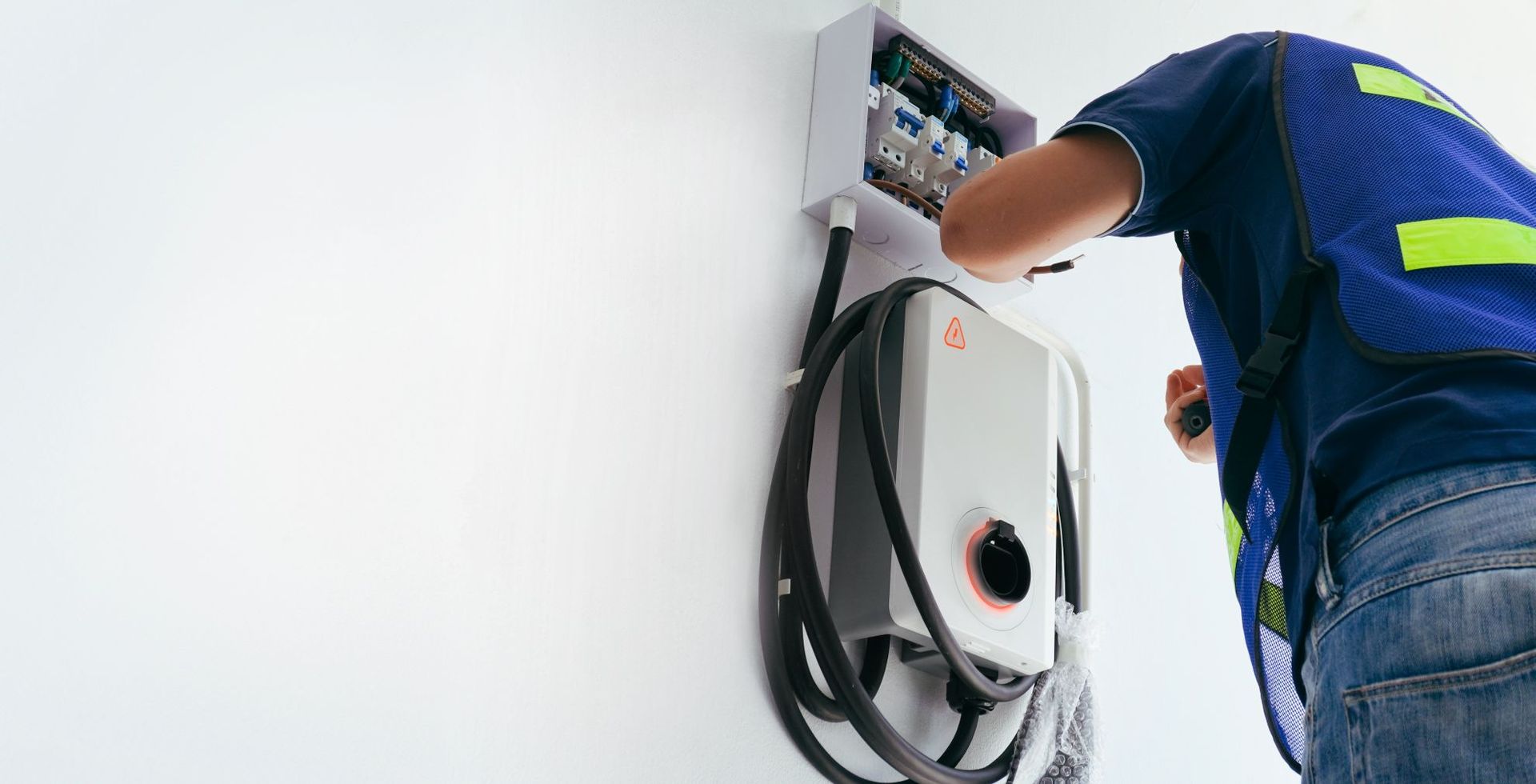
What Proper Charger Installation Requires
EV charger circuits use 6-gauge or larger copper wire depending on charger amperage and circuit length, routed through conduit to protect against physical damage and moisture exposure. The circuit originates at a dedicated two-pole breaker in your main panel or subpanel, runs through walls or along exterior surfaces to the charger location, and terminates at a NEMA 14-50 receptacle or hardwired connection depending on charger design. Outdoor installations require weatherproof enclosures rated for wet locations, while garage installations need proper mounting height and clearance from vehicle traffic.
Once installation is complete, your charger delivers consistent power without tripping breakers, the vehicle receives full charge overnight during off-peak hours, and the system remains compliant with electrical code and manufacturer requirements. Properly installed chargers integrate into your home's electrical system without causing voltage drop issues that affect other circuits or creating safety concerns from undersized wiring.
Many installations include provisions for future expansion, such as installing conduit for a second charger location or panel capacity allowing additional charging circuits if household vehicle needs change. This forward planning prevents costly service upgrades when adding capacity later becomes necessary.
Questions Before Installing EV Chargers
Rochester installations often occur in older homes where existing panel capacity requires evaluation before adding continuous 40 to 50 amp loads that operate for extended periods during overnight charging cycles.
What electrical capacity does an EV charger require?
Most residential Level 2 chargers draw between 30 and 50 amps continuously, requiring a dedicated 40 to 60 amp circuit that cannot be shared with other loads and must be sized to prevent voltage drop over the circuit length.
How do you determine if my panel can support a charger?
Load calculation adds the charger's continuous draw to your existing electrical loads, comparing total demand against service panel rating while accounting for simultaneous use factors and ensuring adequate capacity remains for other household needs.
Can a charger be installed if my panel is already at capacity?
Panel upgrades from 100 to 200 amps accommodate charger circuits alongside existing loads, or load management systems can be installed that interrupt lower-priority circuits like water heaters when the charger operates, staying within existing capacity limits.
What charger brands and models work with your installation?
Installation accommodates any Level 2 charger meeting UL standards, including hardwired models like Tesla Wall Connector, ChargePoint Home Flex, and JuiceBox, or plug-in models using NEMA 14-50 receptacles compatible with portable chargers.
How long does charger installation typically take?
Installation duration depends on circuit routing complexity and whether panel upgrades are necessary, but typical garage installations with adequate existing capacity complete in four to six hours including circuit installation, charger mounting, and connection testing.
Jeff Thomas Electric installs EV charging systems that integrate safely into your electrical service, providing reliable vehicle charging without overloading existing circuits. Schedule an installation assessment to determine what your property requires for EV charging capability.