
Systems Built for Business Power Demands
Commercial and Office Wiring in Rochester for offices, retail spaces, and commercial properties requiring reliable electrical infrastructure
Commercial properties demand electrical systems that support computers, servers, point-of-sale equipment, lighting on timers or sensors, and HVAC systems running continuously during business hours. Jeff Thomas Electric provides electrical solutions for offices, retail spaces, and commercial properties across Monroe County, including new builds, tenant improvements, and system upgrades that address changing business needs. The work is designed to meet operational power demands while maintaining safety and code compliance in occupied commercial environments.
Commercial wiring involves higher voltage requirements, three-phase power in some cases, and circuit designs that isolate critical loads from general-use outlets to prevent nuisance tripping. Installations include dedicated circuits for equipment that can't afford downtime, emergency lighting systems that activate during power failures, and distribution panels positioned for future expansion. Working within business timelines often means scheduling installations during off-hours or phasing work to avoid disrupting operations.
Request a commercial quote to discuss electrical requirements for your office, retail space, or commercial property.
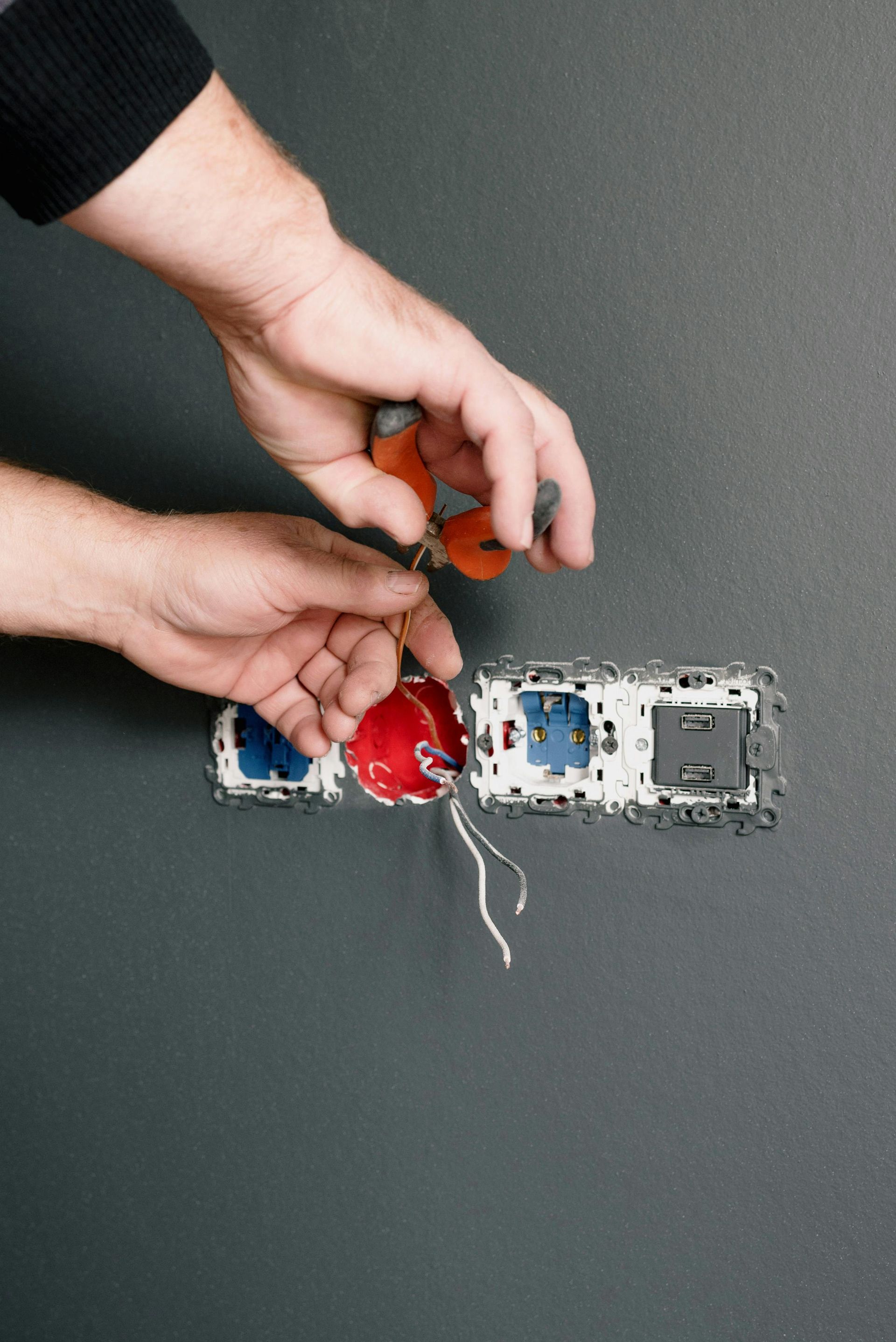
What Proper Commercial Wiring Requires
Commercial electrical systems must meet stricter codes than residential work, including conduit requirements for wire protection, specific box fill limits, and labeling standards that allow future troubleshooting by maintenance staff or other electricians. Panel schedules need to be accurate and updated, circuit directories must clearly identify which breakers control which areas, and wire sizing must account for voltage drop over longer runs common in commercial buildings. The system also needs to accommodate the reality that commercial spaces get reconfigured regularly as businesses grow or tenants change.
Once the wiring is complete, businesses experience fewer interruptions from tripped breakers, equipment runs reliably without voltage sags during peak demand, and adding new devices or workstations doesn't require rewiring existing circuits. Jeff Thomas Electric designs systems with spare capacity in panels and pathways for future cable runs, which simplifies expansions and technology upgrades down the line. Clear labeling and documentation mean that maintenance staff can identify circuits quickly during troubleshooting or when adding new loads.
Tenant improvement projects often involve working within existing building infrastructure, which means coordinating with building owners, verifying available panel capacity, and ensuring that new work integrates cleanly with the base building systems. Retail spaces require special attention to display lighting, security systems, and point-of-sale power, while offices need adequate data circuit support and conference room audiovisual infrastructure that often shares conduit runs with electrical wiring.
What Property Owners Usually Ask
Commercial electrical projects raise questions about capacity, timeline coordination, and how to plan for future business growth.
What determines whether a commercial space needs three-phase power?
Three-phase power is typically required when the total electrical load exceeds what single-phase service can deliver efficiently, or when specific equipment like large HVAC units, industrial machinery, or commercial kitchen equipment requires it. The utility company provides three-phase service based on the building's service entrance capacity and the demands outlined in the electrical design. Converting from single-phase to three-phase involves upgrading the service entrance and main distribution panel.
How does electrical work get scheduled around business operations?
Most disruptive work happens during evenings, weekends, or scheduled closures to avoid interrupting customer-facing operations or critical business functions. Work that can be completed without power shutdowns, like pulling wire through conduit or installing boxes in new construction areas, happens during regular hours. Phased installations allow portions of a space to remain operational while other areas are being worked on.
When should a business plan for a panel upgrade versus working within existing capacity?
Panel upgrades make sense when adding significant new loads like server rooms, commercial kitchen equipment, or additional HVAC zones that would overload the existing service. Load calculations determine whether the current panel and service entrance can handle the additional demand safely. Expanding businesses often benefit from upgrading early rather than working around capacity limits that constrain future growth.
What electrical considerations apply to open office layouts versus traditional offices?
Open layouts require careful placement of floor outlets or overhead drops to avoid long extension cords crossing walkways, which create tripping hazards and code violations. Power and data often need to be accessible in multiple locations to support flexible desk arrangements. Lighting design must provide even coverage without creating glare on computer screens, which often means using indirect or diffused fixtures rather than bright overhead lights.
How does Rochester's mix of historic and modern commercial buildings affect wiring projects?
Older commercial buildings often have outdated wiring, limited panel capacity, and structural elements like masonry walls that complicate running new conduit. Modern builds allow easier wire routing but often have tighter budgets and faster timelines that require efficient installation practices. Each building type presents different challenges in delivering code-compliant, reliable electrical infrastructure.
Jeff Thomas Electric works with business owners, property managers, and general contractors to deliver commercial electrical solutions that support current operations and accommodate future expansion across Monroe County. Schedule a consultation to outline your commercial wiring needs and timeline requirements.